

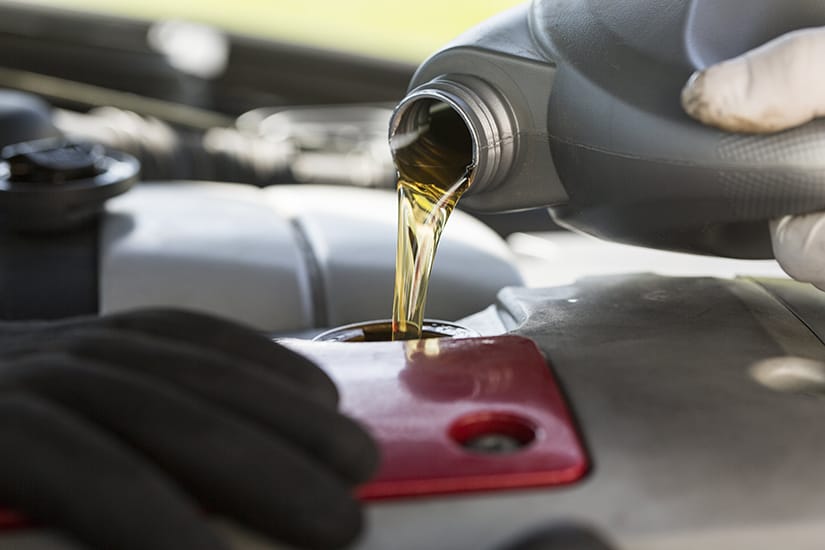
Choosing the right engine oil grade can make a big difference in how smoothly your engine performs. The numbers and letters mentioned on an engine oil container indicate how the oil behaves at different temperatures and conditions.
Grades such as 5W-30, and 5W-40 and 0W-20 engine oil describe how they perform in cold and hot conditions. Hence, understanding these ratings makes it easier to follow your manufacturer’s recommendations and maintain optimal engine performance.
What the “W” and the Second Number Actually Mean
Engine oil grades show how the oil behaves in different temperature conditions. The SAE (Society of Automotive Engineers) viscosity rating uses two numbers to explain this.
For example, in 5W-40 engine oil:
- The number before the “W” (Winter) shows how easily the oil flows when the engine is cold. In 5W-40, the “5” indicates the oil’s cold-temperature flow performance. A lower number means the oil can circulate more quickly during cold starts, helping provide faster lubrication.
- The number after the “W” shows how thick the oil remains at normal operating temperatures. In 5W-40, the “40” means the oil is designed to maintain its viscosity and provide the required protection. A higher number means it maintains its viscosity better at higher temperatures.
Why Modern BS6 Engines Are Engineered for Thinner Oil Than Earlier Cars
Modern BS6 engines are designed with advanced technology, which allows them to work with thinner oils like 0W-20 engine oil. Here is why manufacturers recommend thinner oils for BS6 vehicles:
- Meets Strict BS6 Emission Norms: Thinner oils create less internal drag on engine components. This allows the engine to run more efficiently, consume less fuel and reduce exhaust emissions to pass BS6 standards.
- Quicker Oil Flow: Thinner oil reaches engine parts faster during start-up, helping reduce wear.
- Better Flow During Cold Start: A low-viscosity oil like 0W-16 engine oil reaches critical engine parts faster during cold starts.. This protects sensitive parts from wear right at startup before the engine reaches full operating temperature.
- Built for the Engine: BS6 engines are built with tighter tolerances and narrower internal channels. Low-viscosity oils flow easily through the gaps where thicker, traditional oils may struggle to pass.
0W20 vs 5W40 vs 5W30 – Where Each One Is Actually Used
The SAE J300 standard defines how engine oil viscosity grades are classified. However, the right grade depends on your vehicle’s engine design and the manufacturer’s recommendation.
| Viscosity Grade | Best Suited For | Typical Applications |
| 0W-20 engine oil | Faster cold starts and improved fuel efficiency | Many modern BS6 petrol, hybrid and fuel-efficient vehicles specify this grade. Most of the Indian manufacturers like Maruti Suzuki, Hyundai, Tata shifted to 0W-20/0W-16 recommendation around 2020 |
| 0W-30 engine oil | Quick oil flow during cold starts with additional protection at operating temperatures | Vehicles where manufacturers recommend this grade for a balance of efficiency and higher-temperature protection |
| 5W-30 engine oil | Balanced performance for everyday driving | Many passenger cars used for city driving, highways and stop-start traffic |
| 5W-40 engine oil. | Higher operating temperature performance | Performance-oriented vehicles and engines that regularly operate under higher loads or temperatures |
If your owner’s manual recommends 0W-20, 5W-30, or 5W-40 engine oil, Castrol MAGNATEC is one of the options available in these full-synthetic SAE-classified viscosity grades for everyday driving. If your vehicle is designed for more demanding performance, Castrol EDGE can be considered depending on the recommended viscosity.
What Happens If You Use the Wrong Viscosity Oil
Using the wrong engine oil viscosity can affect lubrication, engine efficiency, and long-term performance. That’s why manufacturers specify a particular oil grade for each engine.
- Too Thick: An oil that is thicker than the recommended grade may take longer to circulate during cold starts, especially in lower temperatures. This can delay lubrication, increase internal resistance and affect fuel efficiency.
- Too Thin: An oil that is thinner than the recommended grade may not form a sufficiently thick lubricating film under high temperatures or heavy loads. This can increase metal-to-metal contact, accelerate wear and may affect other components.
Conclusion
Choosing an oil that matches the recommended viscosity and performance specifications helps maintain proper lubrication, support engine efficiency, and protect important components over time.
Engine oils from trusted manufacturers, including options such as Castrol MAGNATEC and Castrol EDGE, are available in different viscosity grades to suit vehicles with specific requirements.

Comments are closed.